Qualities of a Healthy Neurodivergent Home

Barbara Farland • August 28, 2024

Ongoing stress, sadness, anxiety, and a whole host of other negative emotions are prevalent among households where learning differences are present. When children have ADHD, dyslexia, dysgraphia, or other neurodiversities, it is indeed normal for parents to feel especially burdened by the challenges at hand. 

However, believe it or not, positivity is possible even in the most difficult and uncertain circumstances. There seem to be four primary qualities that mark healthy, happy neurodivergent homes: habits, honesty, hope, and humor. 

Habits

At the top of the list? Having clear and consistent routines around just about everything—routines that become so natural to and embedded in daily life that it’s hard to imagine not following them. In other words, routines become habits. 

Neurodivergent families especially benefit from habits such as eating together, being mindful about diet and exercise, having consistent bedtimes, limiting screen times, and putting structure around friendships and free time. It’s clear that families who are good at this have kids with much better academic outcomes. Sadly, the rest live in chaos.   

Research proves it on a number of fronts. Special to note is that kids are more socially and emotionally attuned to themselves and others when routines are followed. The benefits also show up in adulthood; those who establish good habits in their younger years are more likely to manage their time well and maintain focus as grown-ups.1 

Honesty 

It might be tempting to sweep tough issues under the rug—to pretend everything is just fine. But, trite and obvious as this may sound, pretending things are okay does not make things okay. Honesty is critical for a couple important reasons. 

For one, kids need to know the truth. Following any other path leads to a betrayal of their trust, which only adds to family strife. A better approach? Accepting—even celebrating—the different ways our brains work, neurodivergent or otherwise. 

How does this look in a practical sense? As a first step, diagnoses can be viewed with curiosity, even appreciation, versus fear and dread. This leads to mindsets that recognize strengths versus focusing on weaknesses. Sure, it’s also critical to acknowledge and address learning challenges and gaps, but an atmosphere of encouragement versus hyper-criticism is more likely to take shape when neurodivergence is seen as a unique difference, not an insurmountable disability. 

Honesty is also important when it comes to self-awareness, self-expression, and self-care. Let’s face it, life can get tense at times no matter the family, but some basic emotional and relational skills can make all the difference. 

Feeling angry, sad, nervous, excited, content, etc.? Introspection and reflection are invaluable tools for recognizing current moods and possible triggers—and ensuring good honest communication with other family members. Sharing such insights through conversations with each other can prevent strong feelings from coming out “sideways.” This means fewer arguments and other hard moments that can rock the whole family system. Talking about self-care strategies (e.g., some time alone, a walk outside) is also important, especially when dealing with more challenging emotions. Put another away, home should be a safe place for adults and kids alike to be honest about their needs.  

Hope

It’s not easy to receive the news of a chronic, lifelong condition no matter the diagnosis. A whole host of heavy emotions are natural responses from both kids and parents, but a healthy family chooses not to linger there. Simply put, a healthy family is a hopeful family.    

What does hopefulness look like from day to day? Neurodivergent or not, a family must know and practice where true self-worth comes from. Of course, kids also must be encouraged to do their very best academically, but faltering or failing grades should not shape their sense of identity and personal value. They should always know deep in their bones that they are loved as they are and no matter what. This is what should drive their goals and ambitions, not shame or guilt or people-pleasing. Childrens’ positivity and hope flourish when surrounded by loved ones who offer consistent encouragement.  

The same holds true for parents: worth is not related to performance. There’s great temptation in society to compare and compete—parenting is not exempt from this unfortunate phenomenon. How kids do on assignments, tests, and report cards does not reflect on one’s parenting skills—this bears repeating: good parenting is not synonymous with academic success. Through all the up years, down years, and somewhere-in-between years, love is the only measure that truly matters in raising children. 

Humor

Academic and behavioral concerns are no laughing matter, but there’s always room for some humor. Taking life too seriously only makes for more tension and anxiety in already stressful situations. 

What does humor look like in a neurodivergent home? Douglas Cootey, a blogger for ADDitude, alludes to how his brain differences add levity to day-to-day life. He writes that “[ o]ur busy ADHD brains can impulsively put random, seemingly unassociated items together in funny ways that entertain those around us.”2  In other words, humor may be one of the “superpowers”3 that make people with ADHD stand out from the rest. The ability to be funny or to enjoy comical things can become both a benefit and a balm in relating to the world around them.

Parents may also find special ways to use their humor to temper frustrating behavior. For example, while at school, a young boy with numerous learning differences became obsessed with a malfunctioning clock; the minute hand wouldn’t move despite the second hand going around and around as usual. When he mentioned the distraction at home, his father was quick to tell a fitting joke: “Well, at least the clock is right twice a day.” The student was eager to share his dad’s remark with his teachers the next day (and, needless to say, the errant clock was removed from the classroom).   

Humor must be kept in check, however, especially when it comes to “masking,” which is the inclination to repress or disguise one’s true feelings.4 When a person feels different and just wants to fit in and be liked, humor is a common coping mechanism. So when is it healthy versus harmful? It’s generally quite easy to spot awkward attention-seeking antics versus quick wit and creativity. The key is to take time to celebrate and enjoy the latter. 

Habits. Honesty. Hope. Humor. These are words worth posting on the refrigerator or making sure they’re prominent somehow, some way. More than that, they’re worth living with authenticity, with consistency, and for the sake of the whole family. Here’s to your health!

Barbara Farland is an English & Social Studies instructor at Brightmont Academy in Plymouth, Minn. She holds a master’s degree in Business Communication from the University of St. Thomas and, prior to pursuing a second career in education, worked as an award-winning public relations and communications professional in both the corporate and nonprofit sectors. As a “storyteller by nature and teacher at heart,” Barbara continues to contribute to various anthologies, among other writing projects.  
More Blog Posts + News


By Rachel Pollock December 10, 2025
The School Embraces Neurodiversity When choosing the right school the curriculum offered at the school must support students' needs. Some parents consider the use of adaptive digital platforms that support the needs of students who struggle with material management. Parents hope for Instruction from experts trained in adaptive curriculum and subjects so that they are prepared to adjust on the fly. Parents need to feel confident their child’s unique learning style will be supported and nurtured. Sensory Friendly Distraction-Reduced Spaces and Quiet Areas Small classrooms with a small teacher-to-student ratio allows for distraction-reduced spaces and quiet areas. Reducing distractions and disruptions from others allows the student in the smaller classroom to focus. In the 2020 research published in Science Direct students shared their experience about why they tended to gravitate towards the library in a traditional school. “The separate, more contained and manageable nature of the space is highlighted, as well as the more relaxed furnishings and homelike decor. The ‘quietness’ of the space is related to libraries typically being quiet places, but also…due to the presence of soft furnishings, carpets and books acting to dampen the sound. [Students} discuss the library as a social space, where they can ‘chat with friends’, in a more conducive environment than an invasive corridor or clattering classroom.” Focus and engagement are two important components to student success. When students feel at ease and successful they feel motivated to come back to school day after day and quench their curiosity in their academic subjects. Muting, filtering and transforming space: Autistic children's sensory ‘tactics’ for navigating mainstream school space following transition to secondary school - ScienceDirect Individual Attention
By Tony Beals December 3, 2025
Perfectly Imperfect
Lady refusing to get out of bed
By Barb Farland November 26, 2025
It’s a Monday morning and, as usual, Nora awakens to the chime of her phone alarm. It’s time to get ready for school, but Nora’s parents have a hard time remembering a drama-free morning when she didn’t dawdle, complain of a stomach ache, become really emotional, etc. In fact, Nora hasn’t ridden the bus in two months and has been marked tardy a whopping 21 times. Pair these incidents with six full-day absences this semester, and Nora’s parents feel more than frustrated. They’re legitimately concerned about Nora’s mental health and overall well-being. And they should be. Nora is among the 2-5 percent of students nationwide who struggle with school refusal—and it’s not to be taken lightly.  What is school refusal? What does it look like? And how can families address the issue of school refusal and overcome its characteristic behaviors and consequences? This is what we know…
By Barb Farland November 19, 2025
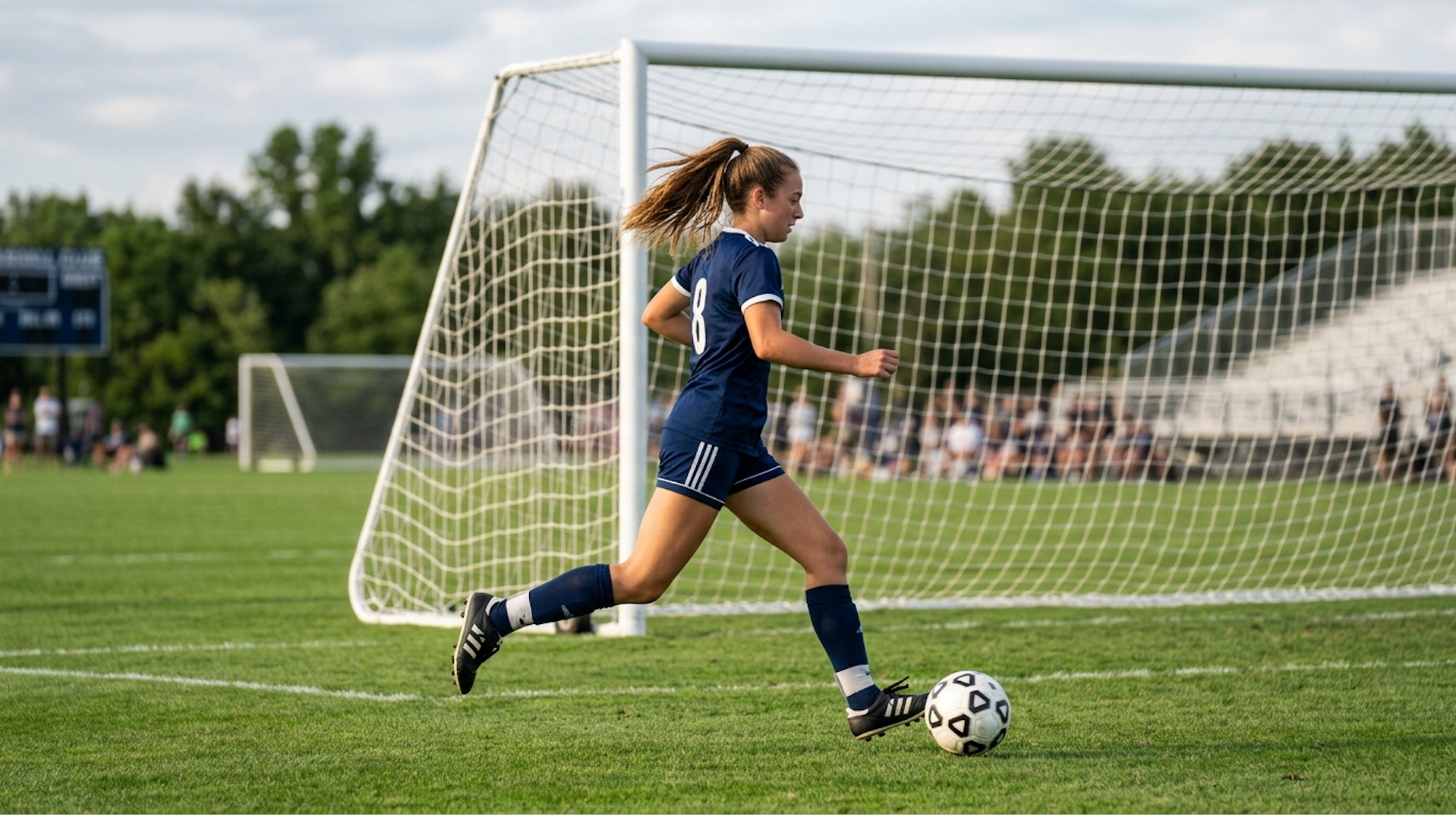
Flexible Schooling Options for Competitive Athletes and Performers
teacher and student smiling
November 17, 2025
Private School Specializing in One-to-One Instruction for 1st-12th Grade Students National — As Thanksgiving approaches, Brightmont Academy, a private accredited school offering one-to-one instruction, is taking a moment to reflect on a year filled with growth, gratitude, and student success. With multiple new campus openings in 2025 and plans to open several more soon, Brightmont continues to expand its mission of transforming education through individualized instruction that empowers each student to reach their full potential. Keith Jackson, Marketing Director at Brightmont Academy, shared his appreciation for the families who have made this mission possible. “This Thanksgiving, we’re especially grateful for the families who trust Brightmont Academy to provide a one-to-one education that helps their children thrive,” Jackson said. “Every student’s success story is a reminder of why we do what we do.” Brightmont’s unique model of personalized learning has helped countless students rediscover confidence and joy in the classroom. This season of gratitude serves as a reminder of the small victories that make a big difference in each student’s educational journey. “At Brightmont Academy, gratitude comes from seeing students who once struggled now finding confidence and joy in learning,” Jackson explained. “Thanksgiving reminds us how important it is to celebrate progress, big and small.” The spirit of Thanksgiving also reflects Brightmont’s core values of connection and collaboration. Just as families gather around the table to share gratitude, Brightmont brings together teachers, students, and parents as partners in each child’s education. “Just as Thanksgiving brings families together, Brightmont Academy brings teachers, students, and parents together as a team to create an individualized education plan that truly fits each child,” Jackson said. As families give thanks and look ahead to the new year, Brightmont Academy invites prospective parents to visit a campus and experience firsthand how personalized education can transform a child’s life. With four new locations opening this year, Brightmont continues to offer more families the opportunity to discover a learning environment where students flourish both academically and emotionally. Families interested in learning more are encouraged to schedule a campus tour and see how Brightmont’s one-to-one instruction is changing lives across the country. Brightmont Academy is located in nine states and is currently accepting enrollments. Brightmont Academy is an accredited private school that provides one-to-one instruction. One experienced teacher works with one student throughout every learning session. Customized full-time programs and individual courses are offered for grades 1-12. Students can also receive individualized tutoring for all 1-12 subjects, study skills, and test prep. Brightmont Academy has served thousands of students since 1999 and has 21 campuses in Arizona, Colorado, Florida, Georgia, Illinois, Michigan, Minnesota, North Carolina, and Washington. For more information call 1-888-521-0887 or visit: www.brightmontacademy.com . Watch our video: Brightmont Academy - The One-to-One Flexible school - 1st through 12th
By Rachel Pollock November 12, 2025
Is there support for your student if they are struggling? What are the class sizes? Do the teachers personalize learning and know their students? Does the school schedule work for your family? Is the school accredited? Does the school offer academic rigor for your child? Does the school have a good reputation and location? Are students college and career ready after graduation? 
Reluctant Teen
November 10, 2025
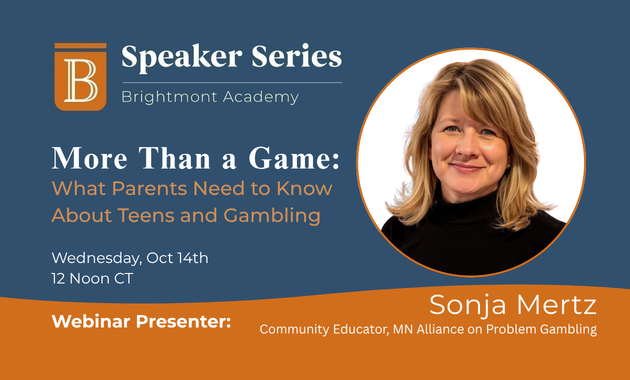
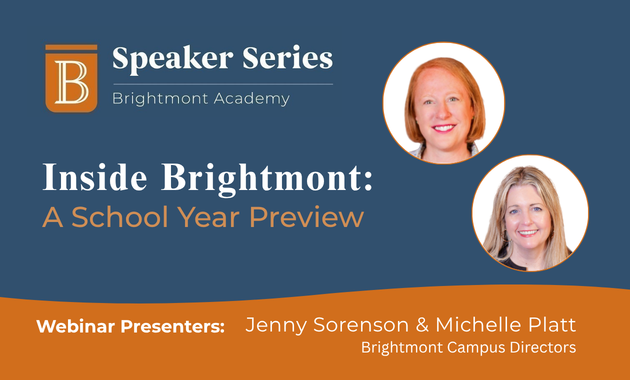
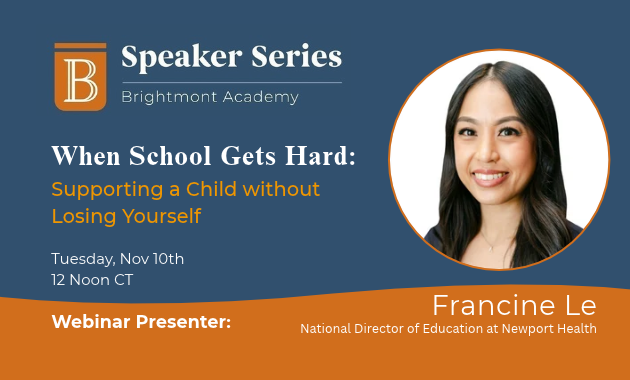
Private School in Mendota Heights Specializing in One-to-One Instruction for 1st-12th Grade Students Mendota Heights, MN — Brightmont Academy, a private accredited school offering one-to-one instruction, is helping families stay informed and connected through its Speaker Series, a free monthly webinar designed to support parents and students. Hosted by Minnesota Campus Directors Michelle Platt of Mendota Heights and Jenny Sorenson of Plymouth, the virtual sessions feature expert speakers discussing topics that matter most to families—ranging from ADHD and adolescent anxiety to sleep issues and school transitions. The Speaker Series began as a way to make professional insight more accessible to Brightmont families. “A big part of my job is networking, and I’m constantly meeting trusted professionals through events, referrals, and outreach,” explained Platt. “The Speaker Series gives families direct access to these experts and helps parents feel connected while learning more about Brightmont Academy and the many resources available to them.” Each hour-long session allows parents to engage in real time with speakers and ask questions through a live chat. Topics have included ADHD, adolescent anxiety, evaluations, sleep, and school avoidance—issues that often impact students’ academic and emotional well-being. “Each speaker shares actionable tips for parents while also giving families a chance to learn more about Brightmont’s unique strengths, such as open enrollment, flexible scheduling, part-time and full-time options, skill building, and executive function programs,” said Platt. The response to the Speaker Series has been overwhelmingly positive. Families can RSVP for upcoming sessions on Brightmont’s website, and recordings are available afterward on Brightmont’s YouTube channel and social media platforms. “For me, the series has strengthened relationships with families and professionals, given me new insights as a director and parent, and expanded the network of resources I can confidently recommend,” Platt said. “Most importantly, it ensures Brightmont families feel supported not just by our school, but by a wider community of experts.” See our webinar recordings and RSVP to upcoming webinars. Brightmont Academy is located at 720 Main Street, Suite 101, in Mendota Heights and is currently accepting enrollments. Families and professionals are invited to attend an Open House event on Thursday, November 20th, 2025, between 10:00 AM and 4:00 PM. Brightmont Academy is an accredited private school that provides one-to-one instruction. One experienced teacher works with one student throughout every learning session. Customized full-time programs and individual courses are offered for grades 1-12. Students can also receive individualized tutoring for all 1-12 subjects, study skills, and test prep. Brightmont Academy has served thousands of students since 1999 and has 21 campuses in Arizona, Colorado, Florida, Georgia, Illinois, Michigan, Minnesota, North Carolina, and Washington. For more information call 1-888-521-0887 or visit: www.brightmontacademy.com . Watch our video: Brightmont Academy - The One-to-One Flexible school - 1st through 12th
By Tony Beals November 5, 2025
The Boy, The Horse, and The Lesson We Forget in Teaching
Alesia Stevenson
November 3, 2025
Private School in Raleigh Specializing in One-to-One Instruction for 1st-12th Grade Students Raleigh, NC — Brightmont Academy, a private accredited school offering one-to-one instruction, is pleased to announce the appointment of Alesia Stevenson as the new Campus Director of its Raleigh campus. Stevenson brings a rich background in education, business, leadership, and community engagement, along with a passion for helping students discover their strengths and succeed through personalized learning. Stevenson has spent her career fostering environments where both students and teams can thrive. She has worked extensively in education and organizational leadership, focusing on expanding access to resources and tailoring support to meet individual needs. As both an educator and a parent, Stevenson has experienced first-hand the life-changing impact of individualized instruction. “My background spans education and program development, often in environments where meeting students and families ‘where they are’ is essential,” said Stevenson. “That experience translates directly into Brightmont’s model, which focuses on tailoring instruction to each student’s unique strengths, challenges, and goals.” Stevenson first learned about Brightmont while researching alternative education models centered on the student learning experience. Brightmont’s one-to-one instruction stood out as both innovative and aligned with her vision of student success. “I was drawn to Brightmont because the role allows me to bring together my experience in education, leadership, and community engagement to create meaningful impact,” Stevenson said. “The opportunity to lead a campus where every student receives personalized support felt like a natural extension of my passion for helping young people succeed.” At Brightmont, Stevenson is eager to establish the Raleigh campus as a trusted resource for families seeking alternatives to the traditional classroom. She envisions a school community where students build confidence and resilience alongside academic progress. “My vision is to see our Raleigh campus grow into a trusted educational home for students and families seeking a more personalized path,” Stevenson said. “I believe Brightmont’s individualized approach will resonate in Raleigh, a dynamic city where families value strong, innovative educational options.” Brightmont Academy is located at 6070 Six Forks Rd in Raleigh and is currently accepting enrollments. Brightmont Academy is an accredited private school that provides one-to-one instruction. One experienced teacher works with one student throughout every learning session. Customized full-time programs and individual courses are offered for grades 1-12. Students can also receive individualized tutoring for all 1-12 subjects, study skills, and test prep. Brightmont Academy has served thousands of students since 1999 and has 21 campuses in Arizona, Colorado, Florida, Georgia, Illinois, Michigan, Minnesota, North Carolina, and Washington. For more information call 1-888-521-0887 or visit: www.brightmontacademy.com . Watch our video: Brightmont Academy - The One-to-One Flexible school - 1st through 12th
More Posts